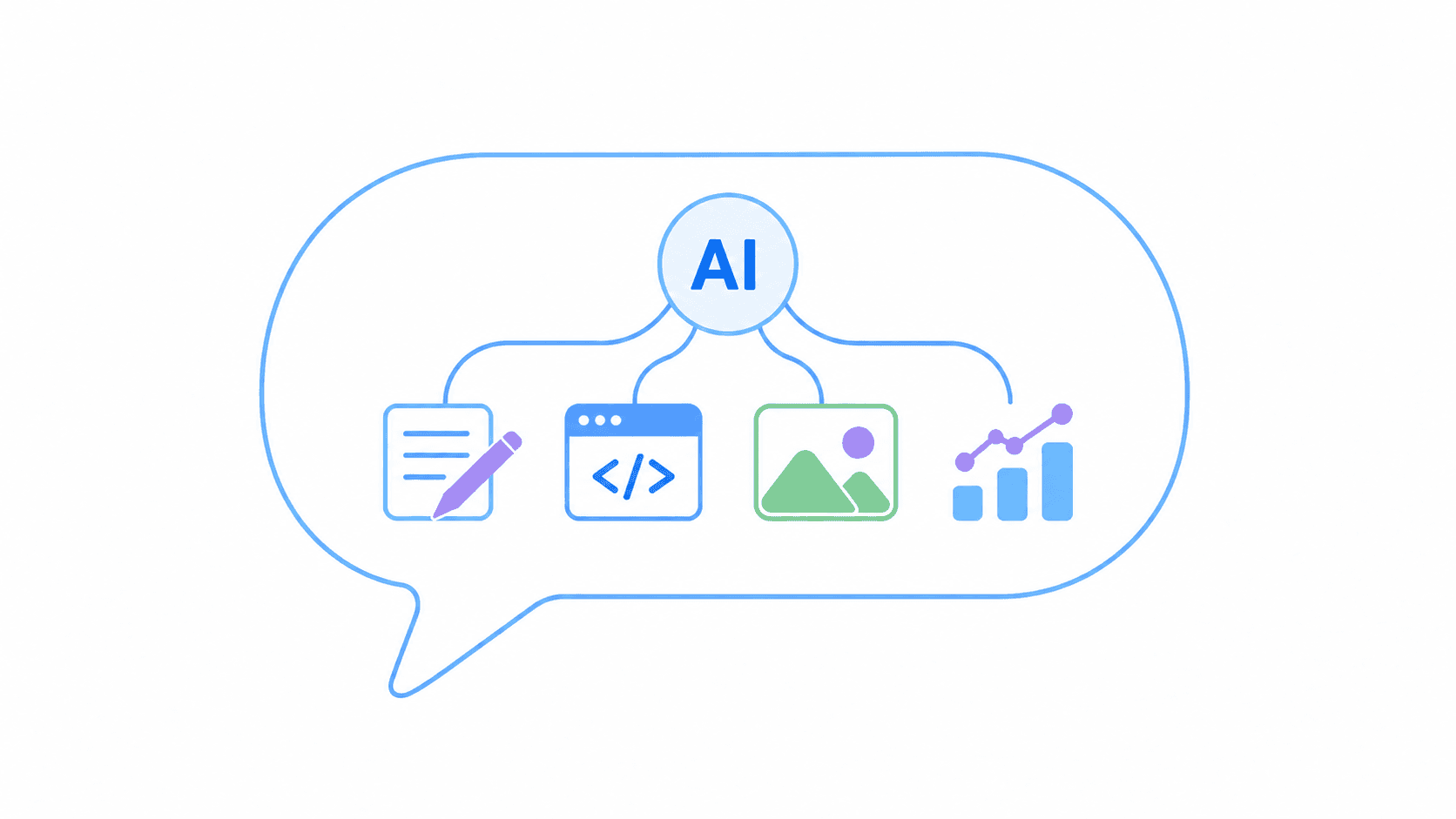
Sometimes you need help improving a piece of writing. Later, you may want to summarize a long document, understand a piece of code, generate an image, analyze data, or add an AI-powered feature to your application.
All of these tasks involve artificial intelligence, but they do not require the same capabilities.
We do not use one tool for every job in the physical world. The same principle applies to AI: one model is not always the best choice for every task.
The problem is that choosing the right model often means comparing unfamiliar names, creating multiple accounts, reviewing different prices, and moving between disconnected platforms. Before AI can save time, people may spend too long trying to understand the tools themselves.
Hoveydai began with a simple question:
What if people could start with the task they want to complete instead of the name of a model?
Choosing Between AI Models Should Be Easier
New AI models appear constantly. One may be particularly good at writing, while another performs better at programming. One may respond quickly and cost less, while another can process longer documents or follow more complex instructions.
This variety is valuable, but it also makes choosing more difficult.
People should not have to memorize dozens of model names or study complicated comparison tables to complete a straightforward task. They need clear answers to practical questions:
- Which model is appropriate for my task?
- How quickly will it respond?
- Approximately how much will it cost?
- Can it work with my language, documents, images, or code?
- Can I easily try a different model if the first one is not suitable?
Hoveydai is not another AI model. It is a platform designed to provide simpler access to different models and capabilities from one place.
One Workspace With Multiple Specialists
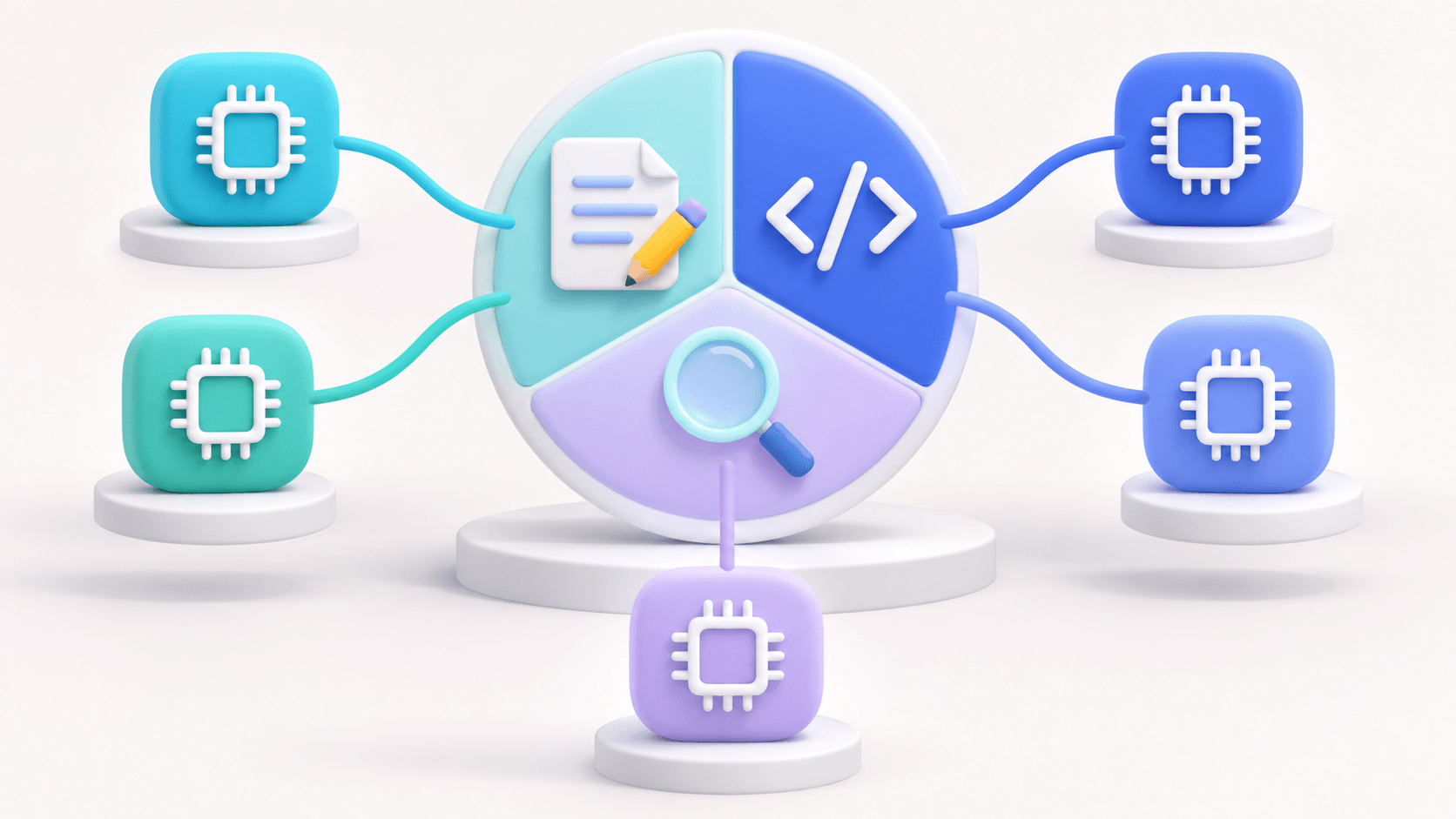
Think of Hoveydai as a shared workspace with access to different specialists.
You might use one model for creative writing and another for analyzing a document. A fast and affordable model may be perfectly suitable for a short question, while programming or complex analysis may require a different set of capabilities.
Changing models should not mean rebuilding your workflow or moving to another platform.
With Hoveydai, you can use one account and access different supported models from the same environment. The goal is to make the appropriate option easier to find without overwhelming users with unnecessary choices.
A Consistent Experience Across Models
Each model comes with its own terminology, settings, limits, and pricing structure. When those differences are spread across separate products, comparing models can take more effort than completing the task itself.
Hoveydai provides a consistent way to access supported models while keeping the differences that matter visible.
You can stay in the same workspace, submit the same task to another model, and compare the results without rebuilding your setup.
The models remain different, but trying them does not need to feel fragmented. A consistent interface makes comparison easier without hiding the capabilities or limits of each option.
Pricing Should Be Clear Before Use
On many platforms, users begin thinking about cost only after they have used a service. Hoveydai aims to make pricing and model information clearer before a request is submitted.
Different models have different capabilities and prices. A more expensive model is not automatically the right choice.
A smaller and more affordable model may handle a short rewriting task perfectly well. A more capable model may be worth using for a complex document, advanced analysis, or a difficult programming problem.
The best choice is often the simplest model capable of completing the task at the required level of quality.
For this reason, Hoveydai aims to provide clear information about supported models, their capabilities, and their usage costs so users can make more informed decisions.
Chat for Everyday Tasks and an API for Building
People use AI in different ways.
Some users want to communicate directly with a model, analyze a file, improve their writing, or learn something new. For them, the Hoveydai chat interface provides a simple starting point.
Developers may want to integrate AI into their own applications. For supported requests, Hoveydai also provides an HTTP API that uses the common chat-completions request format.
Developers can follow a familiar integration pattern: send a request to the base URL with an API key and a model name.
A separate API key can be created for each application so that its usage and cost can be tracked independently. This makes it easier to track each project's usage and cost.
The chat interface is designed for everyday work, while the API is designed for building products. Both follow the same principle: access should be simple, and usage should be traceable.
AI Is Useful but Not Infallible
AI models are powerful, but they are not flawless.
A model can misunderstand a question, overlook important information, or produce an answer that sounds confident but is still incorrect.
For medical, legal, financial, or other sensitive decisions, AI-generated information should always be reviewed by a qualified professional.
It is also important to understand that different models may be created and hosted by different providers. When a request is processed, the information required to answer it may be sent to the provider responsible for that model.
Transparency about this process should be part of the product experience rather than something hidden at the bottom of a page.
Hoveydai is not intended to replace human judgment. It is designed to make useful AI tools easier to access, giving people more time to focus on the decisions that matter.
Test Two Models in Ten Minutes
The best way to understand an AI model is to test it using your own work rather than relying entirely on someone else's description.
Try this simple experiment:
- Choose a real task, such as summarizing a document, writing an email, or explaining a piece of code.
- Write one short and precise request.
- Submit exactly the same request to two different models.
- Compare the responses based on accuracy, tone, speed, and usefulness.
- Choose the model that produces a suitable result at a reasonable cost.
Do not choose a model simply because its name is popular. The important question is whether its output is suitable for your work.
What Hoveydai Is Trying to Simplify
We want to reduce the distance between wanting to use AI and completing the work.
That means:
- You should not need a separate account for every model.
- You should not have to move constantly between disconnected platforms.
- You should be able to understand capabilities and costs before using a model.
- Chat and API access should both have a clear path.
- You should be able to compare models using a real task of your own.
- You should be able to switch models without rebuilding your workflow.
Models will change, new capabilities will become available, and users will discover new ways to work with AI.
One principle should remain constant: technology should become clearer, not more complicated.
Start With the Task Instead of the Model Name
A few months from now, today's most popular model names may have changed. New models will appear, prices will change, and new capabilities will become available.
The most important question will remain the same:
What do you want to accomplish?
That is where Hoveydai begins: with the work you need to complete, not with the largest model, the longest catalog, or an unrealistic promise.
Choose a real task. Try different models. Compare the results and select the option that genuinely meets your needs.
You do not need to memorize every model name.
You only need to describe your work clearly.